Our Magazine
Hotel Interior Design
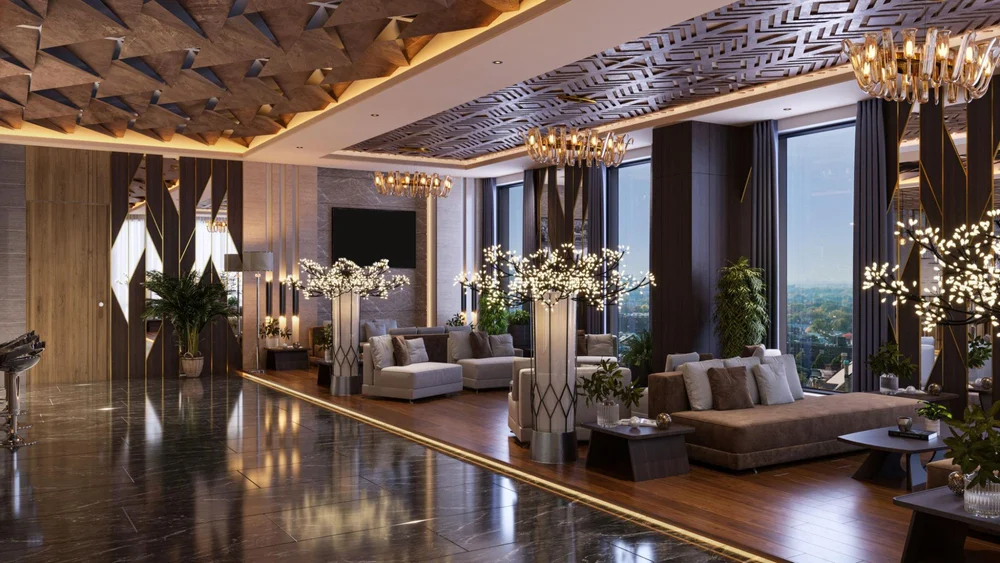
In Jordan’s competitive hospitality market, a hotel’s success no longer depends solely on its location or level of service; hotel interior design has become a key factor in attracting guests and turning their experience into a lasting impression. Today’s guest seeks a holistic experience that begins the moment they enter the lobby and extends to the details of the rooms and hallways, right down to the lighting and materials used.
This is where the fundamental problem lies: many hotel projects are carried out without a clear design vision, resulting in a discontinuous experience, a weak identity, and higher operating costs without a real return on investment.
The solution lies not only in “beautiful decor,” but in strategic design that integrates identity, functionality, and user experience. This is what specialized companies like Istatieh Decoration offer by combining design with execution and materials to achieve measurable results.
In this article, we’ll walk you through the process step by step to help you understand how to create a successful hotel design that serves your investment goals, not just looks.
What is hotel interior design, and why does it shape the guest experience?
Hotel interior design is not merely a matter of choosing colors or arranging furniture; rather, it is a comprehensive system built on a deep understanding of guest behavior and the nature of use within each space. The primary goal is to create a seamless experience that begins the moment guests arrive and continues until they check out, without any friction or discomfort.
Upon entering the lobby, guests should feel both welcomed and at ease. This is achieved through a smart layout, clear circulation paths, and thoughtful use of lighting and materials. In the guest rooms, the focus shifts to comfort and privacy, where small details such as soundproofing, fabric selection, and furniture layout play a major role in guest satisfaction.
Corridors are not merely transitional spaces, but rather a key element in reinforcing visual identity and guiding movement. A successful design ties all these elements together to create a cohesive experience that reflects the hotel’s standards.
Simply put, every decision made in hotel interior design directly impacts guest satisfaction, length of stay, and even the likelihood of a return visit. Therefore, design here is not merely decorative… it is, above all, an investment.
The Importance of Hotel Design in Strengthening Brand Identity and Increasing Occupancy in the Jordanian Market
In the Jordanian hotel market, competition isn’t decided solely by price or rating, but by a hotel’s ability to create a distinctive experience that leads to positive reviews and repeat bookings. This is where thoughtful hotel design comes into play, linking visual identity with the user experience to transform spaces into a true point of attraction, not just a backdrop.
Successful design enhances a guest’s “memorability.” When the lobby has a distinctive character, the rooms are visually and functionally comfortable, and the hallways reflect a consistent identity, the hotel leaves a stronger impression on the guest. This directly influences booking decisions, especially since users rely on photos and reviews before making a choice.
From an operational standpoint, good design reduces long-term costs. Choosing suitable materials that can withstand heavy use and a smart layout that minimizes wasted space helps improve operational efficiency. Furthermore, high-quality hotel finishes reduce the need for frequent maintenance and extend the project’s lifespan.
Ultimately, hotel interior design is not a luxury, but a strategic tool for boosting occupancy rates, enhancing the guest experience, and building a strong hotel brand in a dynamic market like Jordan.
Types of Interior Design Services for Hotels (From the Lobby to Guest Rooms and Hallways)
The hotel project is not conceived as a single space, but rather as a series of interconnected experiences, each of which requires a distinct design approach within a unified framework. Therefore, hotel interior design services are divided into phases and spaces, each of which plays a direct role in the guest experience and operational efficiency.
The process begins with the design of the hotel lobby, which creates the first impression. Here, the focus is on identity, the reception area, and circulation patterns, incorporating elements such as lighting, luxurious materials, and waiting areas in a thoughtful way that reflects the hotel’s standard.
Next come the rooms and suites, where the focus shifts to comfort and privacy. Attention is paid to furniture layout, material selection, soundproofing, and functional lighting to ensure a comfortable stay that fosters positive reviews.
Corridors and transitional spaces play a subtle yet influential role. When designed correctly, they facilitate movement, enhance safety, and seamlessly complement the visual identity.
In addition, our services include selecting finishing materials, coordinating colors, and overseeing the implementation to ensure that the design is brought to life with the same quality and attention to detail.
It is this integration that distinguishes a successful project from just an ineffective “beautiful decoration”.
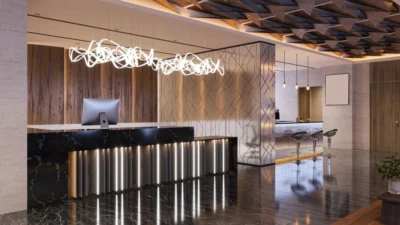
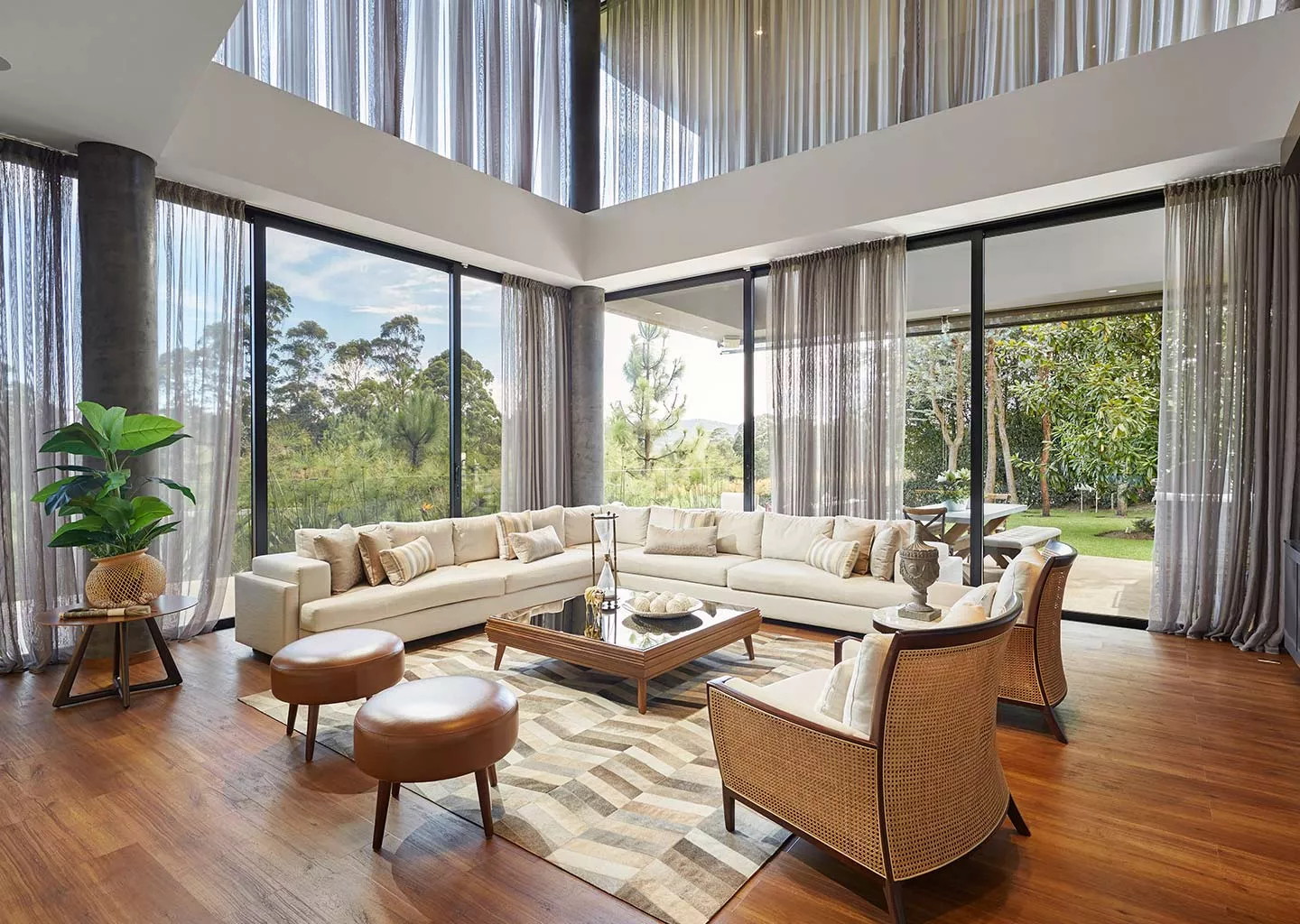
A hotel lobby with a modern interior design that enhances the guest experience
How do you choose a hotel interior design firm that delivers real results?
Choosing the right company to carry out hotel interior design is not a superficial decision; rather, it is a step that determines the success of the entire project. Many investors make the mistake of focusing solely on the final appearance, without assessing the company’s ability to integrate design, operations, and profitability.
The first criteria to consider is sector-specific expertise. Hotel design differs radically from any residential or commercial project, as it relies on constant foot traffic and intensive use. Therefore, the firm best suited for the job is one capable of providing practical solutions for space planning, material selection, and creating a seamless user experience.
Second, the integration of design and execution. Having a single entity manage the project from concept to delivery reduces errors and saves time and money. This includes supervision, procurement, and quality control.
Third, the ability to translate identity into reality. Good design is not only beautiful; it also reflects the hotel’s personality and serves its target audience.
At this stage, it’s important to review realistic business models and clear implementation plans. You can find more information on the
Hotel Interior Design
which outlines the methodology and solutions provided for hotel projects in a professional manner.
In short, the right decision here doesn't just save money… it doubles the return.
The Cost of Hotel Interior Design: What Do You Pay For?
When discussing the cost of hotel interior design, it is a mistake to view it as a fixed figure or merely a decoration budget. The cost here is directly linked to the long-term value you will receive, whether in terms of the guest experience, operational efficiency, or the project’s lifespan.
The key factors affecting cost start with the size of the project and the number of spaces (lobbies, rooms, hallways, facilities). The more complex the layout and details, the higher the cost of design and execution. Likewise, the choice of materials plays a pivotal role; using high-quality, heavy-duty materials reduces maintenance costs down the line.
There is also a difference between design-only services and integrated solutions that include supervision, implementation, and procurement. Although comprehensive solutions may seem more expensive at first, they often save time and reduce errors and waste.
The most important thing is to understand the return on investment. Good design can boost a hotel’s value, increase guest length of stay, and improve occupancy rates. Therefore, the cost here is not an expense… but a direct investment in the project’s performance and profitability.
Why is Istatieh Decoration the right choice for hotel projects?
When implementing a hotel project, the real challenge lies not only in the design, but in transforming the concept into a fully integrated, operational, and profitable experience. This is where Istatieh Decoration stands out as a provider of comprehensive interior design solutions for hotels that combine creativity with professional execution.
The company follows a clear methodology that begins with understanding the nature of the project and the target audience, followed by the development of a design concept that takes into account the visual identity, spatial layout, and user experience. The lobby and guest rooms are not treated as separate elements, but rather as a single, interconnected system that serves the hotel’s overall purpose.
The most important advantage is integration; Estetia provides design, implementation, and supervision services, in addition to supplying decorative materials, ensuring that the vision is realized without gaps or conflicts among the parties involved. This reduces operational risks and saves time and money.
The company also relies on selecting materials suitable for hotel use that strike a balance between luxury and durability, a key factor in the long-term success of any hotel interior design.
Simply put, you’re not just working with a designer… but with a partner who understands how to translate design into actual results within the project.
Frequently Asked Questions About Hotel Interior Design
Is hotel interior design different from other types of commercial design?
Yes, there’s a big difference. Hotels rely on a holistic experience that encompasses comfort, movement, and visual appeal, along with the intensive use of space. Therefore, the design requires an understanding of guest behavior, not just aesthetics.
How long does it take to complete a hotel design project?
The duration depends on the size of the project and the level of detail, but it typically involves several stages: initial design, development, implementation, and completion. End-to-end projects can take anywhere from several weeks to several months.
Can the design be implemented in phases?
Yes, some projects start with key areas such as the lobby and guest rooms, with the remaining spaces being completed later, particularly in cases of phased occupancy or redevelopment.
What is the most important factor influencing the success of a design?
Balancing beauty and functionality. A successful design is one that enhances the guest experience and facilitates day-to-day operations, not just one that looks attractive.
Does the choice of materials really affect performance?
Directly. The right materials reduce maintenance, maintain their appearance for longer, and enhance the quality of the guest experience.
Conclusion
Ultimately, the success of any hotel interior design project depends not only on aesthetics, but also on the design’s ability to create a holistic experience that enhances guest satisfaction and boosts the hotel’s market performance. Every design decision—from spatial layout to material selection—directly impacts the guest experience, operational efficiency, and financial returns.
If you’re planning to launch a new hotel or develop an existing property, choosing the right partner is what really makes the difference. Working with a partner that has a clear vision and proven track record minimizes risks and sets your project on the right path from the start.
The next step is clear:
Start turning your idea into a successful hotel business today.
Schedule a project meeting and let our experts help you create an experience worth repeating.
| Request a project meeting |
| Discover hotel solutions |